01Methodology
Mapping the Information Environment in Japan
How we investigate narratives, amplification, account behaviour and potential foreign information manipulation.
Coming soon
Case study · QUAD+ Information Environment Research
Mapping Japan’s Information Environment
As part of our broader QUAD+ project, this study examines Japan as the first case in mapping the information environments and emerging information threats across the QUAD and wider Indo-Pacific.
02Overview
Japan is an important case for understanding how geopolitical competition increasingly extends into the information space. The Japan project examines how narratives surrounding Japan’s security, foreign policy, domestic politics and regional alliances develop and spread across digital platforms.
The project is guided by three questions
Background
Japan’s information environment is increasingly becoming a domain of strategic competition. The Japanese government has identified foreign information manipulation and disinformation as emerging national-security concerns, particularly where they can influence public perceptions, undermine trust or affect Japan’s international relationships.
03Who is behind it
The researchers directing and editing the Japan study.
Supervisors

Professor, Hitotsubashi University
Professor in the Graduate School of Law and the School of International and Public Policy, and director of the Democracy Advocates at Risk programme. She sits on the steering committees of the East Asia Democracy Forum, the Japan Factcheck Center and the International Coalition for Democratic Renewal. Her research covers democracy support, Japanese foreign policy and influence operations. Ph.D. in political science, George Washington University.

CEO, ThinkFi
Leads ThinkFi's research programme on foreign information manipulation across the Indo-Pacific. Postgraduate in Electronics & Communication, IIIT Bangalore.
Editors
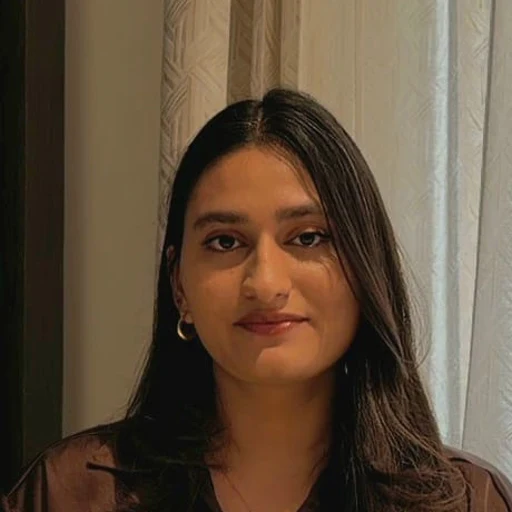
Research Associate, ThinkFi
Works on foreign information manipulation and interference, disinformation and geopolitical research, analysing information environments, narratives and influence operations in their wider security context. Master's in Diplomacy, Law and Business, O.P. Jindal Global University.
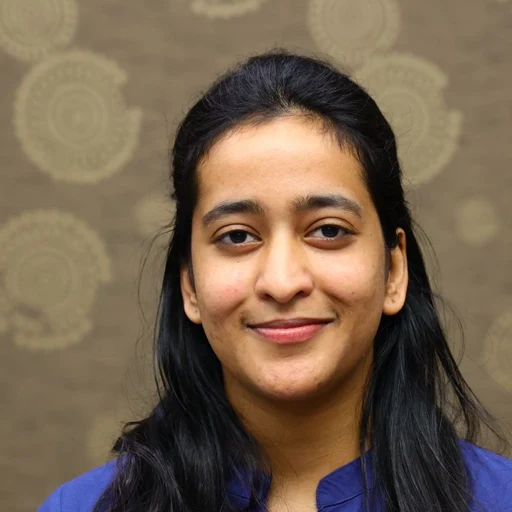
Research Associate, ThinkFi
Contributes data analysis and open-source research to ThinkFi reports, among them China–Pakistan cognitive warfare, Chinese influence operations against Tibetans, and FIMI in the 2025 Philippine elections. Works with AI and machine-learning tooling to trace how narratives move across social platforms. Background in Diplomacy, Law and Business.

Executive Secretary, CAD Chile
Chilean international analyst and former financial reporter. Executive Secretary of the Centro de Análisis para la Democracia, and supports the Global Governance Institute at Hitotsubashi University, where she took her Ph.D. in International Relations. She studies FIMI, China's global influence, and the societal implications of science and technology.
04Japan
Seven agreements and dialogues between 2023 and 2026, from the trilateral response to ALPS-treated-water disinformation through to the first bilateral dialogue dedicated to FIMI.
2023
Coordination against ALPS-treated-water disinformation.
14 July 2023
2024
Strategic communications and countering foreign information manipulation.
5 September 2024
2024
Countering Disinformation Working Group and a resilient information environment.
29 July / 21 September 2024
2024
FIMI included under cooperation on hybrid threats.
1 November 2024
2025
Strategic communications and countering disinformation.
3 February 2025
2025
Exchange of knowledge and experience on countering disinformation and misinformation.
12 May 2025
2026
First dedicated bilateral dialogue on FIMI.
3 June 2026
05At a glance
The scope of the Japan study, as it currently stands.
Dec 2024Apr 2026
Continuous collection across the study period.
0
Distinct narrative clusters traced across the period.
0
English · Chinese · Japanese
06Research
Four report tracks from the Japan study. Each is in preparation and will be published here.
How we investigate narratives, amplification, account behaviour and potential foreign information manipulation.
Examining narratives surrounding Japan's military posture, defence policy and the framing of the 'China threat.'
Examining narratives around Japan-NATO relations, maritime disputes and sovereignty.
Exploring how major events can trigger narrative mobilisation, including the seafood-ban and election-bot narratives.
07Get in touch
We work with researchers, government agencies and enterprise teams across the Indo-Pacific. Get in touch to discuss the programme or a specific line of enquiry.